A Slap in the Face of Public Taste: Russian Futurist Manifesto of 1912


Arthur Lourié, one of the leading Futurist composers.

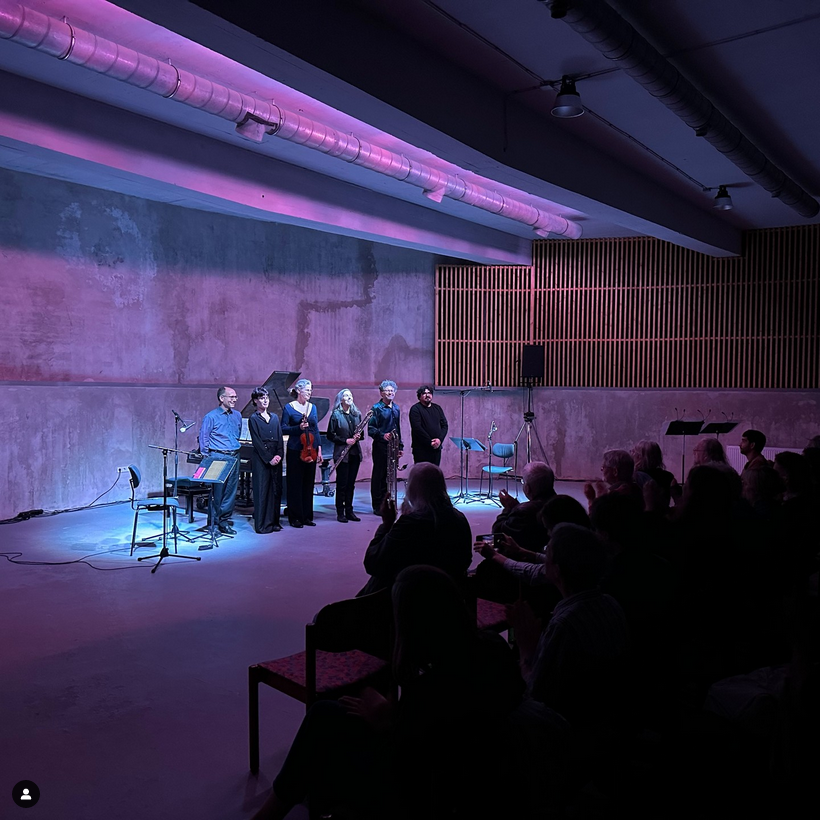
On December 29, 2012, the Pushkinskaya 10 GEZ 21 in St. Petersburg celebrated 100 years of Russian Futurism.The concert, featuring Sergei Oskolkov performing piano works by Arthur Lourié, piqued my interest in this movement. Since I didn’t find an online translation of this movement’s 1912 manifesto that convinced me, here is my own. Many, many thanks to my husband, who helped me. How this all relates to my own experiences will be part of another post. I’ve pasted the original Russian below.

A Slap in the Face of Public Taste
To our readers – an Unprecedented Unexpected First.
We alone are the face of our Time. The horn of time is trumpeting through our lingual arts.
The past constricts us. Academia and Pushkin make less sense than hieroglyphics. Dump Pushkin, Dostoevsky, Tolstoy, etc., etc. overboard the ship of Modernity.
Those who don’t forget their first love won’t recognize their last.
Who would trustingly turn their last love to Balmont’s perfumed lechery? Does it reflect the vigorous spirit of today?
What coward would fear to tear the paper armor from the warrior Bryusov’s black tuxedo? Or does it shine with unknown beauties?
Wash your hands that have touched the filthy slime of books written by countless Leonid Andreyevs.
All those Maxim Gorkys, Kuprins, Bloks, Sologubs, Remisovs, Averchenkos, Chornys, Kuzmins, Bunins, etc. need only a dacha on the river. Thus fate rewards tailors.
From the heights of skyscrapers we look down on their sorry asses!
We order the reverence of poets’ rights:
  1. To enlarge the scope of the poet’s vocabulary with fabricated and derivative words. (word-novelty)
  2. To insurmountable hatred for the language existing before their time
  3. To wrench with horror from their proud brows the Wreath of cheap fame you have made from bathhouse switches
  4. To stand on the rock of the word “we” amidst seas of boos and outrage.
And if your filthy stigmas of “common sense” and “good taste” are still present in our verses, they nevertheless glimmer with the first heat-flashes of the Newly Approaching Beauty of the Word – sufficient and valuable unto itself.


Пощёчина общественному вкусу

Читающим наше Новое Первое Неожиданное.
Только мы — лицо нашего Времени. Рог времени трубит нами в словесном искусстве.
Прошлое тесно. Академия и Пушкин непонятнее гиероглифов. Бросить Пушкина, Достоевского, Толстого и проч. и проч. с парохода Современности.
Кто не забудет своей первой любви, не узнает последней.
Кто же, доверчивый, обратит последнюю Любовь к парфюмерному блуду Бальмонта? В ней ли отражение мужественной души сегодняшнего дня? Кто же, трусливый, устрашится стащить бумажные латы с чёрного фрака воина Брюсова? Или на них зори неведомых красот?
Вымойте ваши руки, прикасавшиеся к грязной слизи книг, написанных этими бесчисленными Леонидами Андреевыми
Всем этим Максимам Горьким, Куприным, Блокам, Сологубам, Аверченко, Чёрным, Кузминым, Буниным и проч. и проч. — нужна лишь дача на реке. Такую награду даёт судьба портным.
С высоты небоскрёбов мы взираем на их ничтожество!
Мы приказываем чтить права поэтов:
1. На увеличение словаря  в  е г о  о б ъ ё м е  произвольными и производными словами (Слово-новшество).
2. На непреодолимую ненависть к существовавшему до них языку.
3. С ужасом отстранять от гордого чела своего из банных веников сделанный вами Венок грошовой славы.
4. Стоять на глыбе слова «мы» среди моря свиста и негодования.
И если пока ещё и в наших строках остались грязные клейма ваших «здравого смысла» и «хорошего вкуса», то всё же на них уже трепещут впервые зарницы Новой Грядущей Красоты Самоценного (самовитого) Слова.

Share

Extended Techniques – a Do It Yourself Handout


Here is a 14 page booklet I put together on how to do the basics of some extended techniques:

  • Harmonics
  • Multiphonics
  • Singing and Playing
  • Whistle Tones
  • Percussive Effects
  • Circular Breathing
  • List of Studies for Further Practice
  • Selected Repertoire for unaccompanied flute

Here is the link. You may pass it on but please give credit where it is due. Any further suggestions are welcome.

Share

Contemporary Music: Where’s the Music?


Funny how memories work. I am left with the lingering conviction, no doubt untrue, that the esthetic of Arnold Schönberg and the Second Viennese School was motivated by peevishness. Not that I was there to remember, but it is the sense I got from student reading and listening to hip lecturers. (For example, I enjoyed Brand and Hailey’s “Constructive Dissonance“, despite the 2 star rating on Amazon). It probably has to do with my own peevishness, and talent for turning fantasies into mis-remembered memories.

“Not the damned Waldstein again!”

Picture a circle of super intelligent youths, coming of age in a time when well-to-do educated folks actually made music together at social gatherings. We disenfranchised musicians can look back with nostalgia on this, but the Viennese version probably got on their nerves. I can understand their thirst for something more intelligent than the harmonic language of Sunday’s salon pieces, and for something genuine, unlike the popular faux-Bohemianism of Gustav Klimt’s circle.  If you are easily irritated (peevish), such a thing can make you want to set the world on fire. And they did.

OK, that was way simplified. Better informed and better working minds than mine have pondered and written about the evolution of the Second Viennese School. My point is to look at now. The biggest question that I ask myself in my ensemble work as a “contemporary” musician is this: Where is the music?

Schönberg may have been seeking artistic and intellectual integrity in music, but I want to know WTF happened to music itself? Yes, I am peevish and here’s why: Music seems the least important aspect to almost every project we do. If it’s a theater project, the visual aspect must take precedence (and be sensational, damn the score!). If it is multi media, the technology takes precedence. If it is “purely” musical, it must be set to a theme that draws audience members in, regardless of quality. (How else do pieces like Henri Pousseur’s  La Seconde Apothéose de Rameau get programmed?)

One benefit of all this is that contemporary classical music is reaching a wider audience. But are we marketing it to death and losing sight of the search for something genuine and meaningful? When I finished my formal musical studies I had a limited number of choices. Contemporary music was one of the least remunerative, but I felt it fit my Geist, somehow. I felt I understood the drive of 20th century composers such as Schönberg and Boulez to find a new language that satisfied both the intellect and the aesthetic. (Not that I put myself on the same level as them!)

Nice weather we’re having, did you enjoy the concert?

Somehow, I feel we have lost sight of this, and I wonder if we are facing the death of contemporary music as we know it. Because as musicians, when you focus on the banalities of market theory, embrace bourgeois  Sunday salon mentality, there is a danger of ignoring  the actual music, ignoring the basic precepts of artistic integrity (be genuine, don’t compare yourself to others). These things will die if not nourished. Even if art music doesn’t immediately expire, it will suffer the indignity of being back where it started. A musical revolving door.

 Rewind, look at Schönberg’s Vienna. Salons, forced small talk, social, artistic and economic comparison of others in a bourgeois setting. I don’t want it. I want the music back.

Revolution sucks. Evolution rocks.
Share

Polyrthythms IV – Practicing Tempo Modulation


This is a continuation of my previous post, where I use Taffanel/Gaubert’s Exercises Journaliers no. 1 to practice polyrhythms. Check that out before trying these! It will give you the correct placement in the measure for 4:3 and 4:5, which I have not notated here.

In these exercises, the metronome stays the same but the player has to change gears. I like to use this as an articulation exercise. You can shift from single tonguing to double tonguing as the tempo changes (but the metronome doesn’t). It keeps you on your toes.

Set your metronome to a 3-beat pattern. The suggested tempo is a quarter note=45 but you can start slower if it helps. You’ll need to start on the third beat for this to come out right. I love the fact that this pattern gives you an added rest for breathing!

The following variation puts the polyrhythm first. If you are doing this as an articulation exercise, it is good to start with double tonguing and then go to single tonging. I find this shift to slower tonguing more challenging.

Here is another variation going against a 5-beat pattern. Set your metronome to reflect that, at quarter note=75 (or slower if that helps). For this to come out right, start on the second beat. (This pattern gives you an eighth note for breathing, hooray!)

And here, a variation starting with the polyrhythm.

I hope these exercises will be of some use. Please post a comment if you have questions. I have had various comments regarding the notation of these exercises. There are more detailed ways of notating them but I find the notation above gets the concept across. In the end, you don’t need the notes to perform the exercises. My goal in this was to use melodic material to develop a sense of rhythmic phrasing.

Share

Polyrhythm III Exercise with Taffanel/Gaubert


Here is the third of my posts on rhythm. You can read the first post here and the second here. I wouldn’t proceed here unless you can perform the exercises of these previous posts.

What I like about using Taffanel/Gaubert no. 1 from Exercices Journaliers is that it is a melodic study. In my first post, I emphasize the need for rhythmical phrasing, and the goal of playing rhythmically and not mechanically. One way of developing this, I think, is to develop your own strong, steady sense of pulse. This is something different from practicing with a metronome. If you test and develop your sense of pulse against the metronome’s ticking, it will grow stronger.

If you take the basic 4-beat pattern of TG no. 1 and set your metronome to a 3-beat pattern at tempo 45, it could fit together like this:

And if you take the basic 4-beat pattern and set your metronome to a 5-beat pattern at tempo 75, it could fit together like this:

You may have noticed that in both examples the 16ths are the same speed, only the metronome setting is different.

An interesting way to practice Taffanel Gaubert nos. 1 and 2 is to first play with the metronome at a quarter note = 120. Play a number of patterns until you feel comfortable with the speed, then continue but change the metronome to a quarter note = 45 and play the 4:3 pattern. When you feel comfortable with that, change the metronome to a quarter note = 75 and play the 4:5 pattern.
This is a wonderful way of practicing groove!

In my next post, I will use these same sort of exercises to practice tempo modulation.

Share

Polyrhythm II


To read my first post on how to figure out polyrhythms, click here.

To internalize an unfamilar polyrhythm, I suggest the following steps:
1) clap and tap the rhythm away from your instrument
2) play it on your instrument, using a single pitch (no moving notes yet)
3) if it’s a difficult passage, play it using simplified material (a simple scale pattern)
4) play as written

Here is a written-out variation on how you can practice a scalar passage 5:4.
Your first step (not shown here) could be to play repeated sixteenths (here, it would be repeated F’s) and accent every 5th one.
The first line shows how groups of 5 sixteenths fit into a 5/4 bar.
The second line fills in the ties with moving sixteenths.
The third and fourth lines are played the same but notated differently. It’s good to practice both.

When you have an even number against 3, I find it easy to feel or visualize the second half of the second beat. It serves as a goal-post, or check-point. Here is an exercise similar to that above, but with 4:3.
Remember, your first step (not shown here) could be to play repeated sixteenth F’s and accent every 3rd one.

Here are some further exercises with even numbers against 3.  If it helps, focus on the back of the second beat.

In the next post, I will take the scale patterns from Taffanel/Gaubert and fit them into a polyrhythmic pattern.

Share

Polyrhythms I


This is the first of a series about practicing complex rhythms related to a pulse, a.k.a. polyrhythms.

Why bother practicing polyrhythms? Some of us have been taught that our metronome is our best friend, but how useful is it really? Do we bother to listen to it? If we do, does it ensure us a good sense of rhythm? If some of us were honest, we would admit that we do not want to listen too closely, for fear of being labeled mechanical. After all, we want to play rhythmically, not mechanically. How to do this?

What I suggest is a method to develop rhythmical phrasing through the study of Taffanel/Gaubert’s study no. 1 from Exercices Journaliers. (I choose this because most of you reading this are flutists, and it is best to apply these ideas to something that is already familiar.). But this introduction will first cover the basics.

A well developed sense of rhythmical phrasing can help whether you want to become the next star beat-boxer or want to keep a steady Scherzo from Mendelssohn’s  A Midsummer Night’s Dream.

You will need a metronome that can be set to a simple beat pattern (2/4, 3/4, etc.), and a willingness to feel a bit clumsy at first.

The following examples use simple mathematics to see visually where your pulse is against the metronome’s (or your partner’s). It is a graphical guide to help develop a FEEL for the polyrhythm.

Given polyrhythm a:b, where b = metronome beats and a = your beats, there are two ways of figuring it out:

1) Take the b number of metronome beats and divide it into units of a, then clap or play every b number of these units. Let’s take the example where a:b = 3:2(three against two). In standard notation it looks like this:

Now take two (b) metronome beats, divide them into units of three (a),
Now clap or play every two (b) of these units as shown by a crossed note head:

_____________________________________________________________________________
2) The second way to figure a:b  is to multiply a times b, in this case 3 times 2. This gives us six:

Now divide this 6 into a (3). That gives us two, so mark every two pulses with an O on top. Then divide 6 into b(2) . This gives us 3, so marks every 3 pulses with an X on the bottom.

The “O”s are the rhythm you play or clap, the “X”s are the metronome beats.

Here is a more complicated example: 5:7

Let’s see how it looks using the first method: given a:b, divide b (7) into units of a (5) :
Now clap or play every b of these units (7) notated by a crossed note head:
Try writing this example using the second method. (Begin by multiplying 5 x 7.)
The next installation will give practical exercises on how to feel 5:4, and any even number against 3.
For more practice, see Peter Magadini’s Polyrhythms, the Musician’s Guide, Hal Leonard Publications, 1993
If you would like a pdf of this information in English or German, please leave a comment.
Share

Bass Flute ins and outs II – for composers


Since my last post about composing for bass flute, I’ve taken note of other questions that pop up with regularity.

Q: Should I notate the pitches as sounding or transpose up an octave?
A: Please transpose them up an octave. Flutists are not used to reading ledger lines below the staff.

Q: Can a bass flute play glissandi?
A: Yes. There are two things to be aware of though.
1) Most bass flutes don’t have open holes like normal C flutes, so research with your local flutist if you want a smooth glissando over an interval larger than a minor second. From a middle C to E-flat, and the C to E-flat an octave above, the flutist can use the trill keys to effect a good glissando.
2) A long tube means the pitch is more difficult to manipulate. Unlike the piccolo, which can go out of tune if you look at it the wrong way, a bass flute requires more effort to bend the pitch. In the lowest octave, where the tube is the longest, a lip glissando of a quarter tone is about the easiest one can do. A lip glissando of a  larger interval can be done if you allow the dynamics to help you. To let the dynamics help: use decrescendo for a downward slide, and a crescendo for an upward slide.

A bass flute by Eva Kingma with open holes. Not every flutist is lucky enough to have one.

The third octave of the bass flute is easiest for glissandi. Here you can use a combination of lips, adding or lifting keys to get a good glissando. For the exact range of a glissando on a particular note, it’s best to check with the flutist for whom you are writing.

Q: Can a bass flute play microtones?
A: Yes. Third tones, quarter tones, and sixth tones are all possible. (Actually, the smaller intervals are easier, for me at least.) Since most bass flutes don’t have open holes, there are basically two ways to produce microtones:
1) De-tune a normally fingered pitch by turning the flute in or out and adjusting with the lips. The lowest notes from its lowest C to E-flat (an octave below middle C) have to be done this way (see question above as to why that could be problematic).
2) Using a special fingering, usually a “shaded fingering” or “forked fingering” that adds keys to a normal fingering.  These fingerings tend to sound very unstable and diffuse (it’s a cool sound, but not always what you need).

Q: What about fast passages with microtones?
A: Beware of writing fast passages with microtones. On any flute, not just bass, learning a fast passage with non-standard fingerings will take the flutist not only twice as long, but I’d say up to ten times as long. That’s fine if you are investing time in a solo work that will get a number of performances and you are sure every note will be heard and count for something.

Q: What about playing fast microtones with just the lip or turning the flute in or out?
A: That’s fine if you have only quarter-sharps or only quarter-flats. Otherwise, you will have a good laugh watching a flutist bob his head in two directions at once. If you are lucky, the flutist will not bang his headjoint against his front teeth and claim liability.

Share

Air & Percussive Sounds for the Flute


 This entry is cross posted on the musikFabrik blog

This video gives a brief demonstration of some common air sounds and percussive effects on the flute.

Here are some further tips for players and composers:
For players, when doing air sounds, it is not always necessary to use as much air as possible. After a long, loud passage, you might find yourself passed out on the floor! The trick here is to make as sibilant a sound as possible. One way of doing this is to actually narrow the throat a little to make the air passage smaller (I know, just the opposite of what we all learned!), then raise the tongue a little, so that it disturbs the distribution of air wanting to escape from your mouth. These are subtle adjustments, you needn’t do too much. All you are doing is speeding up the air, as when you narrow the end of a garden hose to make it spray further. For loud passages, you will still need to give extra support from down below, putting your abdominal muscles into play.
The pizzicati sounds will be louder and more resonant if the flute is turned out a bit. The more you can make resonance in your own mouth, the better. For maximum resonance for key clicks, stay in playing position, open your throat as far as possible, and open your mouth just a bit more over the embouchure hole to create an extra resonance chamber.

I have posted some further information on the production of tongue pizzicato here.

For composers:
There is unfortunately no standarisation of notation for these effects. I have shown on the video those recommended by Pierre-Yves Artaud in his book Present Day Flutes. I find these to be quite intuitive, but maybe another flutist will have another opinion.
When notating air sounds for the flute, please avoid using empty note heads, unless an empty note head is rhythmically called for (a half note, dotted half note, or whole note). I know, Helmut Lachenmann, Isabel Mundry, and other well-known composers use open note heads, but it makes their music extremely frustrating to read. I am hoping that this tradition will die out. (For more about this and to see written musical examples, read my blog entry here.)
Key clicks on the flute fall into my “Why Bother?” category. Unless you carefully compose them in a solo work, or under amplification, you won’t  hear them.  95 % of the time, I end up having to reinforce them with a tongue pizz. Helmut Lachenmann’s Mouvement is an exception, there are some passages with pure key clicks that can actually be heard! However,  other passages in that piece that need the reinforcement of a tongue pizz.
Note that the difference between a tongue pizz produced on the palate and a tongue pizz produced on the lips is not very distinct. It may be best to let the player decide where to produce the pizz. Some can do it on the palate better, others more effectively on the lips. However there are circumstances, such as close amplification, where that small difference can be quite interesting.
Now, if only I could beatbox…..

Share

Small-Interval Multiphonics


On the occasion of the publication of my article on Kazuo Fukushima’s Shun-San in Flute Talk May/June 2010 and Robert Dick’s upcoming masterclass in Bremen (July 6, 2010), I’d like to elucidate some ideas about multiphonics.

Working on Shun-San got me thinking about small-interval multiphonics (those with an interval of an augmented second or less). The first line of advice on how to produce these comes from Robert himself, and can be viewed here. His advice is fantastic, spot-on and humorful, I recommend viewing it.*
*Although I don’t agree with what Robert says in regard to offset G flutes or doing sit-ups, but that’s another story.

In my Flute Talk article, I touch on the subject of small-interval multiphonics. This passage has elicited some raised eyebrows and questions. To begin, I’ll site the passage:

Flutists often encounter difficulty with small-interval multiphonics because they are hung up on trying to produce a focus immediately. That is difficult to do when you are blowing in two directions at once. The irony of these small-interval multiphonics is, at first, you have to unfocus to get the sense of focus. Open up the embouchure hole and let both notes in. Initially there will be a lot of air, but with practice you can refine them. They will sound focused and rich because of the very low difference tone caused by a close interval. When you get the hang of playing these small intervals, it may help to focus on producing this difference tone rather than the individual notes themselves. That may seem strange but sometimes it works.

The first point of confusion may arise in that I assume the reader is already familiar with Robert Dick’s advice: get to know the dynamic range of each note first. Then, keeping a constant airspeed, use the angle of the air to find both notes. If you don’t research the gamut of air speed for each note, you’ll never find the small range of speed that overlaps and works for both.

This is what I meant by having to unfocus to get the sense of focus. You need a constant airspeed and a wide angle at first that will let both notes in. LinkLinkPlease forgive my artistic crudeness, but here hopefully you can see where the angles overlap. If your focus is too narrow at first, you may miss the range where the angles overlap.

Now, to explain that bit about the low difference tone. An explanation of difference tones can be found in Wiki. Often is is not an actual, distinct tone that I hear. Rather, it is just a low sort of humming sound, or it’s as if something opens acoustically at the bottom – a feeling rather than a sound.

I hope this has been of help. Some of those multiphonics in Shun-San are hair-raising! Even someone like me who has been familiar with them for years needs to put in serious practice time on them. It is a good refresher!

Share